


Reflecting Mirror
Perfect Optics is a cutting-edge technology company specializing in the research and development of optical equipment and processes, as well as the design and manufacturing of high-precision optical components and systems. With a strong commitment to technological excellence and top-notch customer service, we deliver premium optical solutions to clients across various industries. Our core business encompasses a wide range of products, including ultra-precision machining equipment (such as ion beam machining systems, robot machining systems, CNC polishing machines, and magnetorheological polishing machines), advanced coating equipment (ALD, IBS coating machines, etc.), precision components (ion sources, light control systems, magnetorheological fluids), ultra-precision manufacturing capabilities (for flat, spherical, aspheric, and freeform surfaces), and customized lenses and optical systems tailored to meet specific customer requirements.
Why Choose Us?
High Quality
Professional testing team, proven detection technology, supporting sampling and re-testing in all links to ensure perfect quality.
Rich Experience
Our company has more than 8 years experience in optics, engaged in professional equipment and production.
Advanced Equipment
Our has lupho scan 420, lupho scan 600, zygo, 4d and other ultra-precision detection equipment, We will make every effort to achieve the required accuracy.
OEM Service
With a strong commitment to technological excellence and top-notch customer service, we deliver premium optical solutions to clients across various industries.


A mirror reflector is a light-directing system based on reflecting surfaces. It is a type of reflecting surface that is highly polished and typically made in the shape of a parabola. The main purpose of a mirror reflector is to concentrate and direct light from a light source placed at its focal point.
Mirror reflectors have several key characteristics that determine their performance. The first is reflectance, which refers to the ability of the reflector to reflect light. Mirror reflectors are designed to have high reflectance, allowing them to efficiently redirect light in a desired direction. The second characteristic is spread, which describes the distribution of the reflected light. Different types of mirror reflectors have different spread patterns, depending on their shape and curvature.
Benefits of Reflecting Mirror
They create the illusion of space
Even in the smallest rooms, it is always worthwhile finding space for a mirror as they can help make them feel more spacious. The reflection that a mirror provides will instantly create depth and hanging a mirror is one of the easiest ways to prevent a room from looking cramped.
Commonly, homeowners will use mirrors in their narrow hallways or small spare bedrooms for this reason and they give the appearance of more space wherever you install them. Of course, if you really want to maximise this effect, you should ensure that you’re using a large mirror to reflect the open space in your room.
They bounce light around a room
Mirrors also work brilliantly in rooms that lack natural light and if you only have a small window, then strategically placing a mirror next to it or opposite it can help to make a space feel bright and airy. Simply put, a mirror can reflect natural light from windows or doors into the room, preventing the need for as much artificial lighting.
In spaces without any natural lighting, mirrors can also be used to reflect artificial light too and they can help you to light dim corners of a room. Having more light in your home will lift the whole atmosphere and make each and every room feel inviting.
They are very useful to have
Of course, mirrors are very handy to have throughout the home too and their original purpose shouldn’t be overlooked. Being able to quickly and conveniently check your own reflection is always useful, and you shouldn’t limit mirrors to your dressing room or your bathroom.
Depending on the layout of your home and where you install the mirrors, you may find that they’re able to provide you with a view of different spaces in your home too. For example, you may be able to hang a mirror that allows you to see into your children’s playroom from your kitchen. So, mirrors really can be incredibly helpful and practical as well.
They add a focal point to a space
Often, in rooms that are lacking a centrepiece, so to speak, a large mirror can be a brilliant eye-catching feature. If you don’t have a fireplace in your living room or a big headboard in your bedroom, you can easily use a mirror with a decorative frame to create a clear focal point and you can easily arrange your furniture around this new focal point.
You can also decide just how much of a statement you want to make with your mirror and when you’re really wanting to give a room a taking point, installing a whole mirrored wall is worth considering. A mirror is often the unique feature that a space is missing.
Types of Reflecting Mirror


Plane Mirrors
When you think of a mirror, a plane mirror is probably what you think of.
This is a flat or planar reflective surface that reflects back the same size image as the object being reflected in it.
These mirrors generate a reflection that is laterally inverted. This means when you hold up your left hand, the image you see makes it appear that your right hand is raised.
Spherical Mirrors
Spherical Mirrors are curved either inward or outward. Carnivals, fun houses and mirror mazes often use these types of mirror to distort or confuse people for entertainment purposes.
Concave or converging mirrors are shaped like a spoon. You are likely familiar with this type of mirror as they are often used in shaving or makeup mirrors to magnify an area for you to get a closer view.
Convex mirrors, on the other hand, bulge outward and makes the image that is reflected a bit smaller, but has the benefit of a wider angle. You might recognize this type of mirror from the passenger side mirror in your car.
One Or Two-way Mirrors
Made famous by Hollywood in movies and TV shows that feature interrogation rooms, this is actually the same type of mirror with two different names.
Mirrors made in this fashion have a coating on one side with a thin reflective material. The light from a room reflects on the coated side, reflecting the room back but allowing a darkened room on the other side to see through.
Have you even seen a reflective glass window on an office building, where you can see your reflection during the day but not see inside, but when the sun goes down and there are lights on inside the office you can see everything and everyone? This is the same premise.
Silvered Mirrors
Just like one sided mirrors, silvered mirrors are coated with a reflective material, most commonly silver.
Today, many of your common bathroom and decorative mirrors for the home are made this way because it is a cost-effective option. Only a thin layer is needed, making it a cheap way to mass produce a versatile mirror.
Non-reversing Mirrors
Non-reversing mirrors are made by joining two mirrors together at a 90 degree angle. This allows you to view the image where the mirrors meet, and reflect back the exact image in them instead of the opposite like a normal mirror.
This is also known as a true mirror, and you can often find this type of mirror in a dressing room or other commercial locations.
Application of Reflecting Mirror
Optical Instruments
Plane mirrors are largely involved in optical devices such as telescopes, periscopes and microscopes. In telescopes, they redirect and focus light to elaborate an augmented image of remote celestial bodies. Periscopes, adorning submarines and equipped with plane mirrors that reflect light, make it possible for a user to get a glimpse of objects above the water surface while still submerged.
Interior Design
Mirrors are essential in the realm of interior decoration, since they create the effect of more spaciousness and strengthen the lighting in the room. A mirror appropriately positioned can create illusion that even a small room is larger and brighter by reflecting the sun rays or artificial light.
Security And Surveillance
Most of the surveillance cameras and the security systems use the plane mirrors to widen the area, but do not increase the size of the device. Mirrors are often installed in locations where direct line of sight is obstructed, creating blind spots in surveillance coverage.
Cosmetic And Personal Care
Plane mirrors are one of the most important items in a bathroom setup, especially in dressing rooms and beauty salons. They give people opportunity to see themselves from different positions for beauty practices, like applying makeup, hair styling and how they look.
Entertainment And Art
Plane mirrors are a resource of the magic industry in their tricks, stage settings and art exhibitions. A magician uses them to make an illusion, and an artist includes them in their artwork in order to become interested in reflections and perspectives, making their creation more complicated and exciting.
Medical Equipment
Plane mirrors are absolutely critical in modern-day medical applications. It is used in endoscopy equipment. Through the use of glass fibers and mirrors, endoscopes perform the flexing function by reflecting the light into the angles offering the vision as the camera navigates the paths around organs for both diagnostics and surgery. This technology allows doctors to visualize and operate within the body without invasive surgery.
Laser Systems
Plane mirrors have long been employed in laser equipment as they facilitate laser beam planning and manipulating with an elevated precision. They are used in laser cutting, engraving, and marking machines across various industries such as manufacturing, electronics, and medical device fabrication.
With the use of plane mirrors, the laser beam is directed onto the surface of the workpiece in the laser engraving machines. This enables tracking of designs from engraving patterns to logos in both high speed and high precision.
Astronomy Observatories
The large revolving telescopes and observatories have reflective surfaces of a parabolic shape. Mirror focus the lights from faraway celestial bodies. These mirrors play a crucial role in enhancing the resolution and clarity of astronomical images.
Projection Systems
Plane mirrors are additionally utilizing on such projection system as those present in theaters, conference halls, and business presentations. They help redirect and align light beams to create sharp and immersive projected images.
In classroom projectors (LCD or DLP) digital, which are mostly based on the symmetrical planes mirrors that do not have the problems of deviations, misalignments and distortion, they provide the desired projection angle being planted forwards.
Solar Concentrators
Plane mirrors are employed in solar concentrator systems to focus sunlight onto photovoltaic cells or thermal receivers, maximizing energy conversion in solar power generation.
Solar Plant assembles mirrors with parabolic shape to concentrate and focus the sunlight onto a single point where it can be transformed into electricity or processed to industrial applications.
Process of Reflecting Mirror
The first step in manufacturing any mirror is cutting the outline of the glass "blank" to suit the application. If the mirror is for an automobile, for example, the glass will be cut out to fit in the mirror mount on the car. Although some mirror manufacturers cut their own glass, others receive glass that has already been cut into blanks. Regardless of who cuts the glass, very hard, finely pointed blades are used to do the cutting. Diamond scribes or saws—sharp metal points or saws with diamond dust embedded in them—are often used because the diamond will wear down the glass before the glass wears down the diamond.
The cutting method used depends entirely on the final shape the mirror will take. In one method, the blades or scribes may be used to cut partway through the glass; pressure can then be used to break the glass along the score line. In another method, a machine uses a diamond saw to cut all the way through the glass by drawing the blade back and forth or up and down multiple times, like an automated bandsaw. Cutting is usually done before the metal coating is applied, because the coating may flake off the glass as a result of the cut. An alternative to cutting the glass to form blanks is to mold the glass in its molten state.
Blanks are then placed in optical grinding machines. These machines consist of large base plates full of depressions that hold the blanks. The blank-filled base is placed against another metal plate with the desired surface shape: flat, convex, or concave. A grinding compound—a gritty liquid—is spread over the glass blanks as they are rubbed or rolled against the curved surface. The action is similar to grinding spices with a mortar and pestle. The grit in the compound gradually wears away the glass surface until it assumes the same shape as the grinding plate. Finer and finer grits are used until the surface is very smooth and even.
Hand grinding techniques exist as well, but they are extremely time-consuming and difficult to control. They are only used in cases where mechanical grinding would be impossible, as is the case with very large or unusually shaped surfaces. A commercial optical grinder can accommodate 50 to 200 blanks, which are all polished simultaneously. This is much more efficient than hand grinding. Even specialty optics can be made mechanically in adjustable equipment.
When the glass surfaces are shaped appropriately and polished to a smooth finish, they are coated with whatever reflective material the designer has chosen. Regardless of the coating material, it is applied in an apparatus called an evaporator. The evaporator is a large vacuum chamber with an upper plate for supporting the blank mirrors, and a lower crucible for melting the coating metal. It is so called because metal is heated in the crucible to the point that it evaporates into the vacuum, depositing a coating on the surface of the glass much like hot breath will steam a cold window. Blanks are centered over holes in the upper plate that allow the metal vapor to reach the surface of the glass. Metals can be heated to several hundreds or thousands of degrees (depending on the boiling point of the metal), before they vaporize. The temperature and timing for this procedure are controlled very precisely to achieve exactly the right thickness of metal. This method of coating creates very uniform and highly reflective surfaces.
The shape of the holes in the upper plate will be transferred to the glass in metal, like paint through a stencil. This effect is often used to intentionally pattern the mirror. Metal stencils, or masks, can be applied to the surface of the glass to create one or more patterns.
Dielectric coatings—either as reflective layers or as protective layers over metal ones—are applied in much the same way, except that gases are used instead of metal chunks. Silicon oxides and silicon nitrides are typically used as dielectric coatings. When these gases combine in extreme heat, they react to form a solid substance. This reaction product forms a coating just like metal does.
Several evaporation steps may be combined to make a multiple-layer coating. Clear dielectric materials may be evaporated on top of metal or other dielectrics to change the reflective or mechanical properties of a surface. Mirrors with silvering on the back of the glass, for instance, often have an opaque dielectric layer applied to improve the reflectivity and keep the metal from scratching. One-way mirrors are the exception to this procedure, in which case great care must be taken not to damage the thin metal coating.
Finally, when the proper coatings have been applied, the finished mirror is mounted in a base or packed carefully in a shock resistant package for shipping.
How to Clean and Maintain a Mirror
Gather Your Supplies: Before diving into mirror cleaning, gather your supplies. You'll need a microfiber cloth, glass cleaner (or a DIY solution of equal parts water and vinegar), and a squeegee for large mirrors.
Dust First: Start by dusting the surface of the mirror with a dry microfiber cloth. This removes any loose dirt or debris, making the cleaning process more effective.
Use A Gentle Cleaner: Apply a small amount of glass cleaner to your microfiber cloth. Avoid spraying directly onto the mirror, as this can lead to streaks. Alternatively, use the DIY vinegar solution for an eco-friendly option.
Wipe In A Circular Motion: Gently wipe the mirror in a circular motion, starting from the top and working your way down. This helps to lift dirt and grime without leaving streaks behind.
Focus On Problem Areas: For stubborn spots, like toothpaste splatters or fingerprints, dampen a corner of your microfiber cloth with more cleaner and gently rub the area until clean.
Dry With A Squeegee: For large mirrors, using a squeegee can make the job much easier. Starting from the top, drag the squeegee down the mirror in a straight line, wiping the blade clean after each pass.
Buff For Shine: Once the mirror is clean and dry, use a dry microfiber cloth to buff the surface to a sparkling shine.
Maintain Regularly: To keep your mirrors looking their best, incorporate mirror cleaning into your regular cleaning routine. A quick wipe-down once a week can prevent buildup and maintain that pristine reflection.
Reflector vs. Refractor: Which is Better?
If you are interested in astrophotography, purchasing a refractor is probably a better option. This is because of its specialized optic design, which captures deep space objects like galaxies and nebulae. Choose an apochromatic model if you want to avoid chromatic aberrations.
A reflector telescope is the better choice if you are interested in brighter celestial objects like the Moon or planets. Due to reflectors’ larger apertures at similar prices, they’ll usually be the best choice for almost all things visual. They can also be great for deep sky astrophotography, but we don’t recommend them for beginners because they require a lot of maintenance and precise setting up.
Refractors, on the other hand, can also be great for visual, but they get very expensive for similar-size apertures as reflectors. But they are excellent for deep sky astrophotography and are what we recommend for all beginners getting started in deep sky imaging.
Our Factory
Perfect Optics is a cutting-edge technology company specializing in the research and development of optical equipment and processes, as well as the design and manufacturing of high-precision optical components and systems.

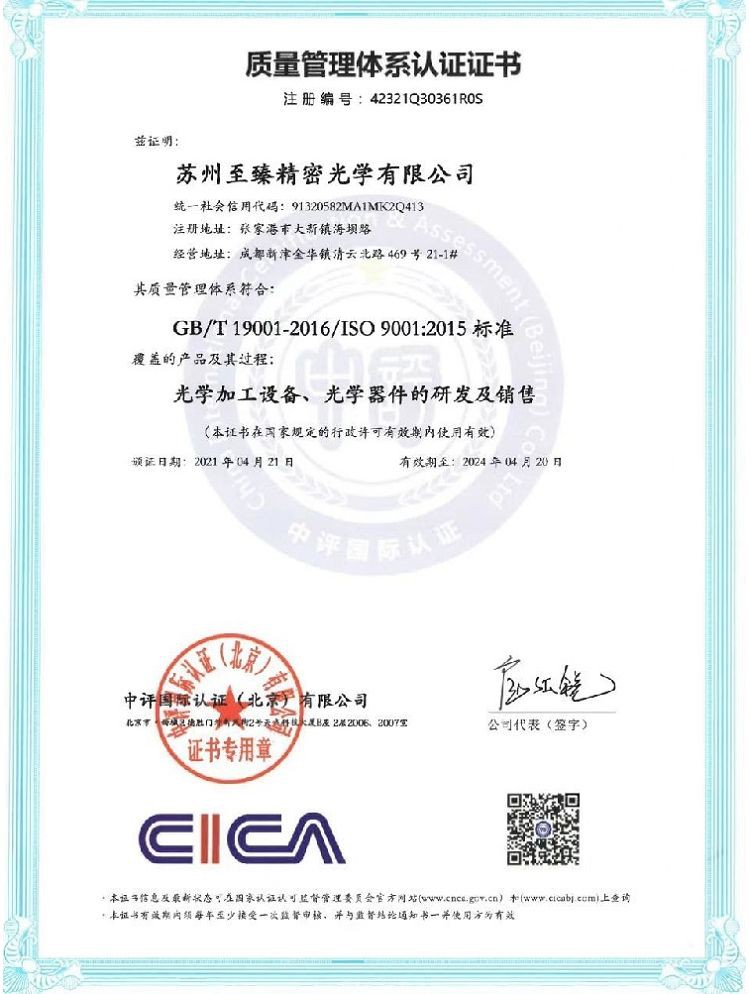
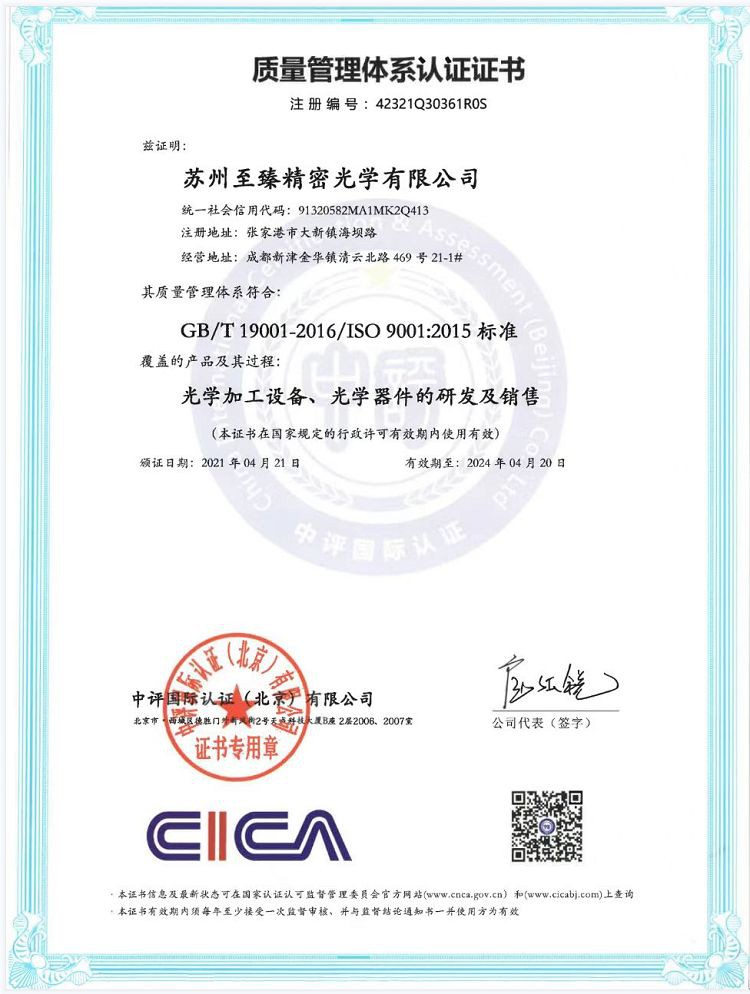
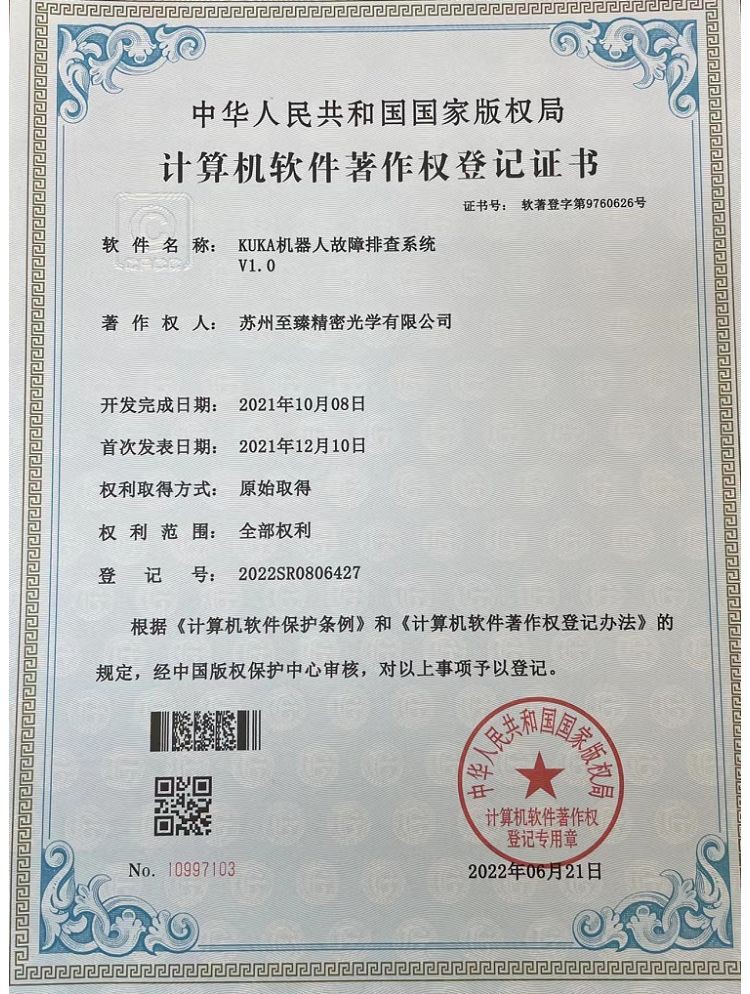
Our Certificate
FAQ
We're well-known as one of the leading reflecting mirror manufacturers and suppliers in China. If you're going to buy customized reflecting mirror made in China, welcome to get pricelist from our factory. For price consultation, contact us.